

I've specified, built, and commissioned MCC panels for mining operations, water treatment plants, and food processing facilities across 8+ countries. The MCC is the backbone of any industrial plant's motor infrastructure — get it wrong, and you'll spend decades patching problems that proper upfront design would have eliminated. This guide covers everything from the basic architecture to the latest intelligent MCC technology, with the kind of practical detail I wish someone had given me when I started.
1. What Is an MCC and Why Does It Matter?
A Motor Control Center (MCC) is a modular assembly of motor starters — each in its own compartment (called a "bucket" or "cell") — housed in a common enclosure with shared busbars. Unlike individual starter panels scattered around a plant, an MCC centralizes all motor control in one location with standardized construction, common power distribution, and unified protection coordination.
The key advantage: standardization. Every bucket follows the same layout, wiring conventions, and protection philosophy. When a motor trips at 2 AM, the maintenance electrician knows exactly where to look and what to expect. In a 500-motor plant, this consistency saves hours of troubleshooting time per incident.
2. Traditional vs Intelligent MCC: Which Architecture Fits Your Plant?
Traditional (Hardwired) MCC
Each bucket contains: a circuit breaker or fused switch, a contactor, thermal overload relay, and control wiring (start/stop pushbuttons wired back to a central PLC or relay panel). Status feedback is via hardwired auxiliary contacts — run, fault, ready. This is still the right choice for small plants (<50 motors) or when the PLC is located right next to the MCC.
- Pros: Simple, proven, low component cost, easy to troubleshoot with basic tools
- Cons: Massive cable count (10-15 control wires per motor), limited diagnostic data, no per-motor energy measurement
- Typical cost per bucket: $400-800
Intelligent (Networked) MCC
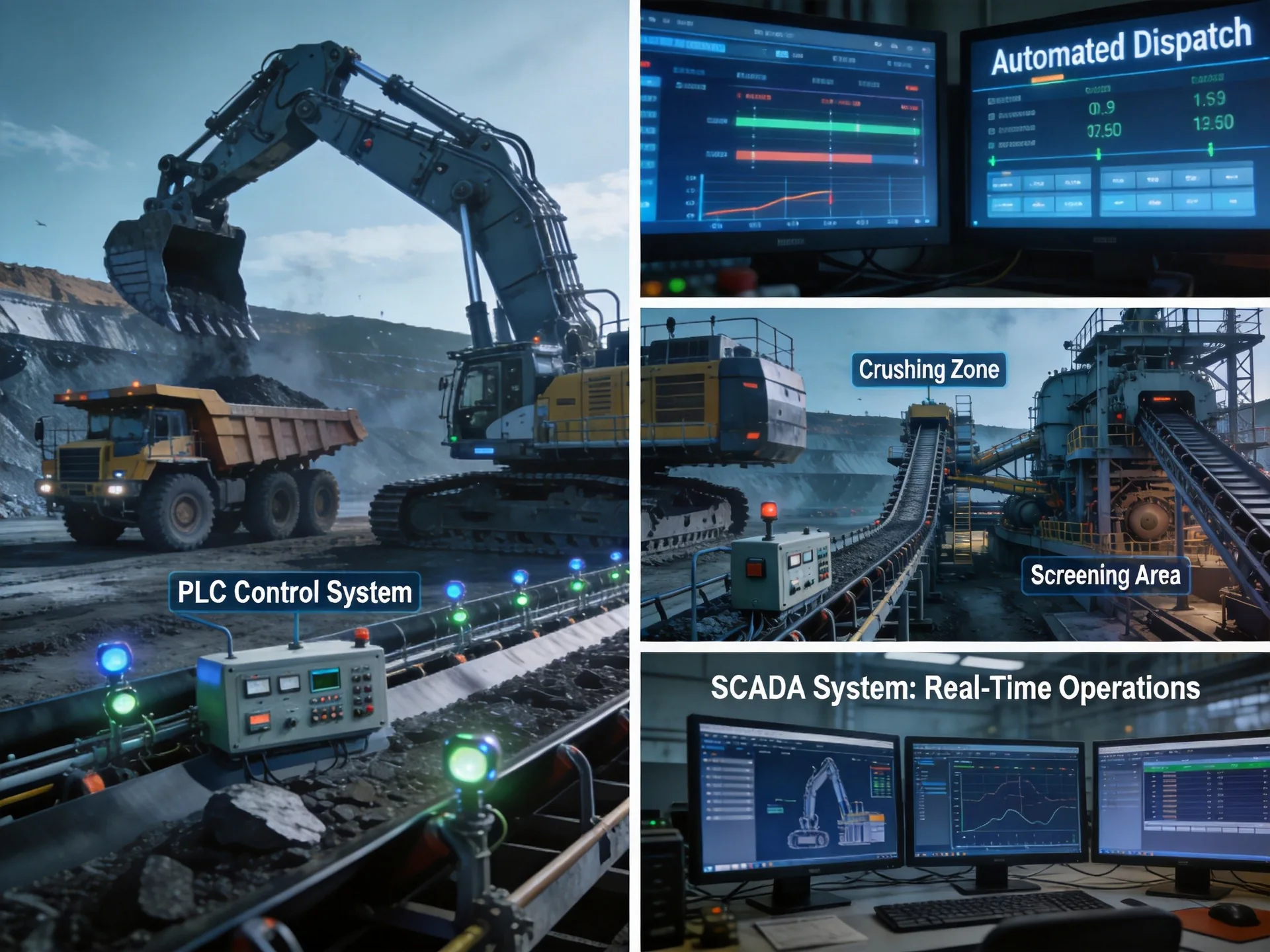
Each bucket includes an intelligent motor protection relay (e.g., Siemens 3UM30, ABB M200, Eaton PKE) that communicates over a fieldbus — typically Modbus RTU, PROFINET, or EtherNet/IP. The relay handles all protection, measurement, and control functions. A single network cable replaces 10+ control wires.
- Pros: 80% reduction in control wiring, per-motor energy monitoring (V, I, kW, kWh), predictive maintenance data (thermal utilization, start count, operating hours), remote diagnostics
- Cons: Higher per-bucket cost, requires network infrastructure and PLC fieldbus interface
- Typical cost per bucket: $900-1,800
- Break-even point: When control cable runs exceed 50 meters per motor, the wiring savings of an intelligent MCC typically pay for the higher bucket cost
💡 SENTRADO Engineering Tip
For our Siemens PLC automation projects, we use PROFINET-connected intelligent motor starters (SIMOCODE pro) integrated directly into TIA Portal. This gives clients real-time motor health dashboards, automatic motor restart sequencing after power failures, and predictive maintenance alerts based on thermal modeling. The additional investment of ~$600/motor pays for itself within 2 years through reduced downtime.
3. Which MCC Bucket Configurations Actually Matter?
The bucket type determines what combination of starting, protection, and control functions each cell provides:
- DOL (Direct On Line): Simplest — breaker + contactor + overload. For motors ≤15 kW. Starting current: 6-8× FLA. Use for small pumps, fans, and agitators.
- Reversing DOL: Two contactors with mechanical + electrical interlock. For conveyors, hoists, and valve actuators. Always include a 50ms dead-time between direction changes.
- Star-Delta: Three contactors + timer. Starting current reduced to ~33% of DOL. For motors 15-90 kW where VFD cost isn't justified. Starting torque is also reduced to 33% — don't use for high-breakaway-torque loads like crushers.
- Soft Starter: SCR-based ramp control. Starting current: 2-4× FLA. For motors 15-500 kW where reduced mechanical stress is critical.
- VFD: Full speed control. For any motor that needs variable speed. These buckets are larger (typically 600-900mm wide) due to the drive + input reactor + output filter + bypass contactor.
- Combination (MCP): Molded case switch + contactor + overload in one compact unit. Space-saving for small motors. IEC 60947-4-1 tested as a coordinated assembly.
4. How Do You Coordinate MCC Protection Devices?
| Device | Protection | Response | When to specify |
|---|---|---|---|
| Thermal overload (bimetallic) | Overcurrent (thermal) | Seconds-minutes | Basic DOL starters |
| Electronic overload relay | Overload + phase loss + unbalance + jam | Milliseconds | Standard for all new installations |
| Motor protection CB (MPCB) | Short circuit + overload | Instant + thermal | Compact starters ≤32A |
| Intelligent motor relay | Full protection + measurement + comms | Milliseconds | Intelligent MCCs, critical motors |
| PTC thermistor inputs | Winding temperature | Direct | High-value or heavily loaded motors |
5. Communication Protocols for Intelligent MCCs
- PROFINET: Best with Siemens PLCs (TIA Portal integration). Supports isochronous real-time (IRT). We use this for all our Siemens PLC projects.
- EtherNet/IP: Best with Allen-Bradley/Rockwell. Uses standard Ethernet hardware. Common in North American installations.
- Modbus RTU (RS-485): Legacy but widely used. Simple, cheap, but slow (max 115.2 kbps). Fine for monitoring; too slow for critical control.
- Modbus TCP: Modbus over Ethernet. Good for retrofit projects where you want to add monitoring without changing the PLC platform.
6. How Do You Size an MCC Correctly?
Step 1: Calculate total connected load — sum all motor FLA values. For a plant with 40 motors averaging 15A each = 600A total.
Step 2: Apply diversity factor. For typical industrial plants: 0.7-0.85. For continuous process plants (cement, chemicals): 0.9-0.95. Design current = 600A × 0.8 = 480A.
Step 3: Select busbar rating. Standard ratings: 400A, 630A, 800A, 1000A, 1250A, 1600A, 2000A, 2500A, 3150A. Always select the next standard size above your design current: 630A busbar.
Step 4: Add 20% spare capacity. Add 20% spare bucket positions for future expansion. Size the busbar for the maximum potential load including spares.
7. Maintenance Best Practices
- Annual thermographic survey: Check every bucket connection, busbar joint, and cable termination. A 10°C rise above ambient indicates a loose connection. I've found joints running at 140°C that were 30°C hotter than adjacent connections — arc-flash waiting to happen.
- 5-year contactor replacement: At 1 million operations (typical for 24/7 process motors), contact resistance increases significantly. Replace contactors proactively at 5 years for critical motors.
- Clean busbar chambers annually: Dust accumulation on insulation reduces flashover voltage. In cement plants, conductive dust can cause phase-to-phase faults. Use compressed air at ≤3 bar.
- Torque-check all busbar bolts annually: Thermal cycling loosens bolted connections. Re-torque to manufacturer specifications (typically 30-50 Nm for M10 bolts).
8. SENTRADO's MCC Manufacturing
Our MCC panel product line includes both traditional hardwired and intelligent networked configurations. We build to IEC 61439-1/2 standards with full type testing certificates. A recent project for a copper mine in Chile: 48 intelligent MCC buckets with SIMOCODE 7AK53 protection relays, PROFINET communication, and a redundant PLC system — all factory-tested and shipped as a single-section assembly.
Need an MCC Panel Quote?
Send us your motor list and we'll design a complete MCC solution — from bucket configuration to busbar sizing to communication architecture.