

Every manufacturing executive has heard the Industry 4.0 pitch: connected machines, AI-driven optimization, digital twins, predictive maintenance. The problem? Most factories are brownfield — running 15-25 year old PLCs, analog instruments, and hardwired relay logic. The gap between "smart factory vision" and "my 2005 Siemens S7-300 with Profibus" feels impossible. It's not. I've led retrofits for factories with 1990s-era control systems and turned them into data-generating, cloud-connected operations within 18 months. Here's how.
1. How Do You Assess Your Current Industry 4.0 Maturity?
Before buying any IIoT hardware, you need an honest automation audit. I use a 5-level maturity model:
- Level 0 — Manual: Operators read local gauges, adjust valves by hand, record data on clipboards. Retrofit priority: install sensors and basic data logging.
- Level 1 — Standalone PLC: PLCs running individual machines with no central visibility. Operators walk the floor to check HMI screens. Retrofit priority: add network connectivity to PLCs.
- Level 2 — SCADA connected: Central SCADA system exists, but data is siloed. No historical trending or analytics beyond basic trends. Retrofit priority: add historian and analytics layer.
- Level 3 — MES integrated: Manufacturing Execution System tracks production, quality, and OEE. Retrofit priority: add AI/ML layer for predictive insights.
- Level 4 — Full IIoT: Edge + cloud architecture with real-time analytics, digital twin, and autonomous optimization. This is the goal state.
Most of our clients at SENTRADO come to us at Level 1 or 2. The good news: you can go from Level 1 to Level 3 without replacing your existing PLCs. That's the entire point of a retrofit approach.
2. IIoT Sensor Deployment: What to Measure First
Don't try to instrument everything. Start with the 20% of equipment that causes 80% of your downtime:
- Motor vibration sensors (accelerometers): Wireless MEMS accelerometers (e.g., IFM VTV122, Banner QM42VT) mounted on critical motor bearings. Sample rate: 10-25 kHz for bearing defect detection. Cost: $150-400 per sensor. This single investment catches bearing failures 4-8 weeks before catastrophic failure.
- Motor current signatures: If your motors already have VFDs, the drive's current waveform contains diagnostic information. Use the VFD's built-in monitoring to detect load imbalances, mechanical binding, and rotor bar defects.
- Energy meters on major loads: Modbus-connected power analyzers (e.g., Schneider PM5560, Siemens PAC4200) on each main feeder. Cost: $200-500 each. Reveals hidden energy waste and power quality issues.
- Environmental sensors: Temperature, humidity, and compressed air dew point. Wireless LoRaWAN sensors (range: 2 km in factory environments) eliminate cable runs entirely.
⚠️ Real-World Pitfall
I was called in to troubleshoot an IIoT project that kept failing. The client had installed 200 wireless vibration sensors but placed them on machine casings instead of bearing housings. The vibration signal was attenuated by the structural damping of the machine frame, making bearing defect frequencies invisible. Always mount vibration sensors directly on bearing housings using stud-mount or magnetic base — never on painted sheet metal panels.
3. Edge Computing: The Layer Most Projects Skip
Edge computing sits between your PLCs/sensors and the cloud. It handles data aggregation, protocol translation, local buffering, and pre-processing. Without edge devices, you'll overwhelm your cloud connection with raw sensor data and lose connectivity resilience.
What an edge gateway does:
- Collects data from PLCs via Modbus/PROFINET/EtherNet/IP and from IIoT sensors via MQTT/OPC-UA
- Buffers data locally during network outages (typically 72 hours of storage on a 256GB SSD)
- Runs local analytics — threshold alerts, rate-of-change detection, simple ML models for anomaly detection
- Forwards aggregated data to cloud via MQTT over TLS 1.3
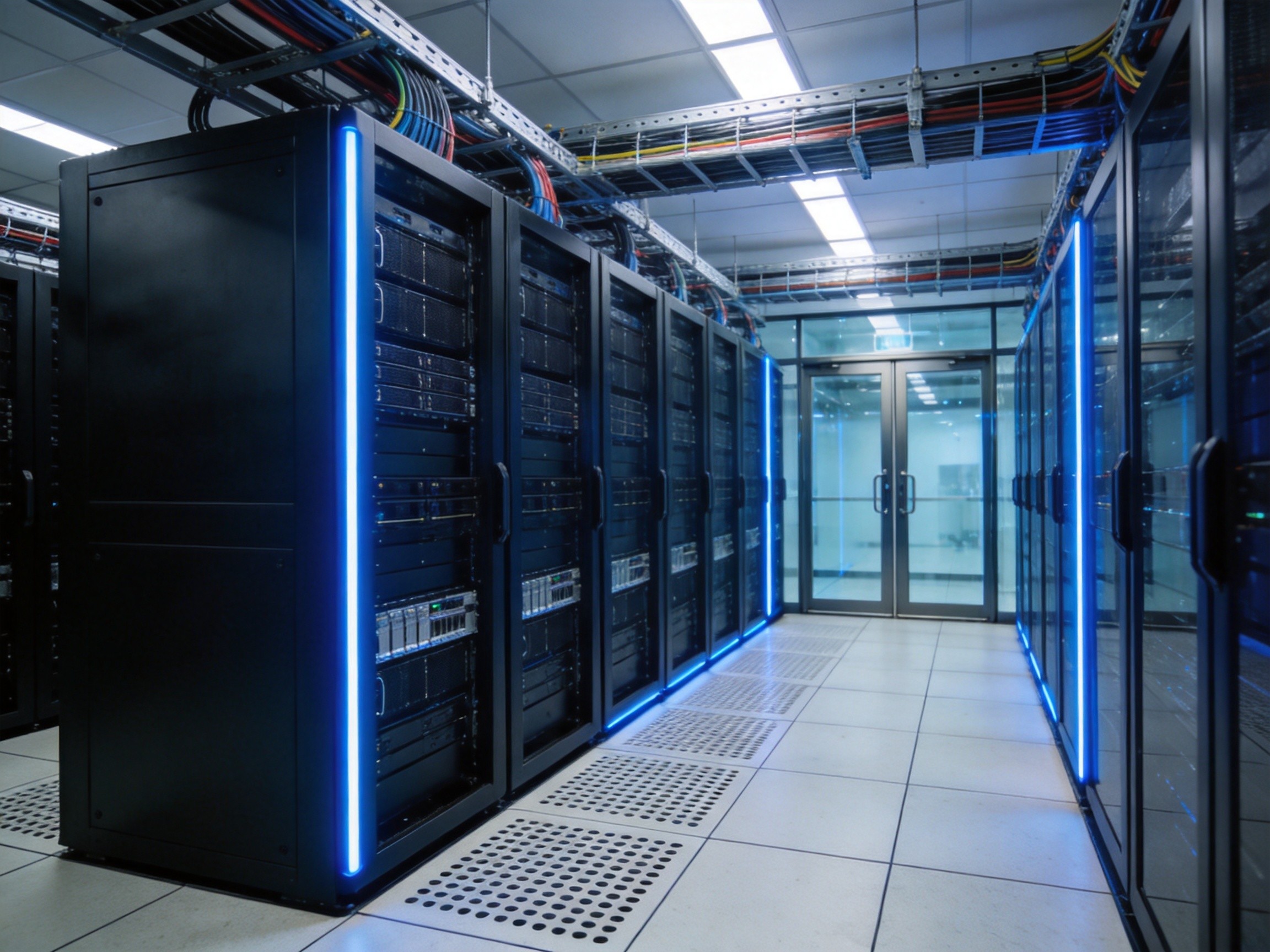
Hardware I recommend: Siemens SIMATIC IPC227E (fanless, -20 to +55°C), or for budget projects, Anybus X-gateway ($500-1,500) for simple protocol conversion. For our smart factory projects, we deploy edge gateways in each production area, connected to a central SCADA system for local visualization.
4. Cloud Integration: Platform Selection
- Siemens Insights Hub: Best for Siemens PLC ecosystems. Pre-built connectors for S7-1200/1500. Asset management, anomaly detection, and OEE dashboards out of the box.
- PTC ThingWorx: Strong AR/VR integration for maintenance support. Good for complex discrete manufacturing.
- AWS IoT SiteWise + Timestream: Maximum flexibility. You build the analytics yourself, but get unlimited scalability. Best for teams with in-house data science.
- Azure IoT Hub + Digital Twins: Strong integration with Power BI for management dashboards. Good enterprise support.
My recommendation: start with Siemens Insights Hub if you're running Siemens PLCs (via our Siemens PLC automation services), or Azure IoT if you want a vendor-neutral platform.
5. How Do You Secure an Industry 4.0 Retrofit?
Connecting your factory floor to the internet opens attack surfaces you never had before. Minimum security posture:
- Network segmentation: IEC 62443 zones and conduits. The OT network must be physically or logically separated from the IT network. Use an industrial DMZ with a firewall.
- No direct internet exposure: IIoT gateways connect outbound only (to cloud). No inbound connections from the internet to the OT network. Ever.
- Certificate-based authentication: Every edge device authenticates to the cloud using X.509 certificates, not passwords. Rotate certificates annually.
- Encrypted communication: MQTT over TLS 1.3 for all cloud communication. OPC-UA with encryption for device-to-edge.
- Patch management: Edge gateways must have remote patching. I've seen gateways running 2-year-old Linux kernels with known CVEs — a ticking time bomb.
6. Phased Implementation Roadmap
Phase 1 (Months 1-3): Data Visibility — Install energy meters and key sensors. Deploy edge gateways. Get real-time visibility on a central HMI dashboard. Cost: $15,000-40,000. ROI: energy savings typically cover this within 12 months.
Phase 2 (Months 4-8): Analytics & Alerts — Connect to cloud platform. Set up automated alerts. Begin collecting historical data. Cost: $10,000-25,000 (platform licensing + integration).
Phase 3 (Months 9-14): Predictive Maintenance — Train ML models on vibration and current data. Implement predictive alerts. Cost: $20,000-50,000. ROI: typically 5-10× through avoided unplanned downtime.
Phase 4 (Months 15-18): Process Optimization — Use the data foundation to optimize energy, scheduling, and quality. Digital twin development. Cost: $50,000-150,000.
7. How Do You Calculate ROI on an Industry 4.0 Retrofit?
For a mid-size factory (50 motors, $2M annual energy cost, $500K annual downtime cost):
- Energy savings from monitoring + optimization: 8-15% = $160,000-300,000/year
- Downtime reduction from predictive maintenance: 30-50% = $150,000-250,000/year
- Total annual benefit: $310,000-550,000
- Total retrofit investment (Phases 1-3): $45,000-115,000
- Simple payback: 3-4.5 months for Phases 1-2; 6-8 months including Phase 3
These numbers aren't theoretical. On a food processing plant retrofit we completed last year, energy savings alone paid for the entire Phase 1 investment in 9 months. The predictive maintenance alerts caught a $180,000 compressor failure 6 weeks before it would have happened.
Ready to Start Your Industry 4.0 Journey?
Our engineers can assess your current automation level and design a phased retrofit plan that delivers measurable ROI without disrupting production.