
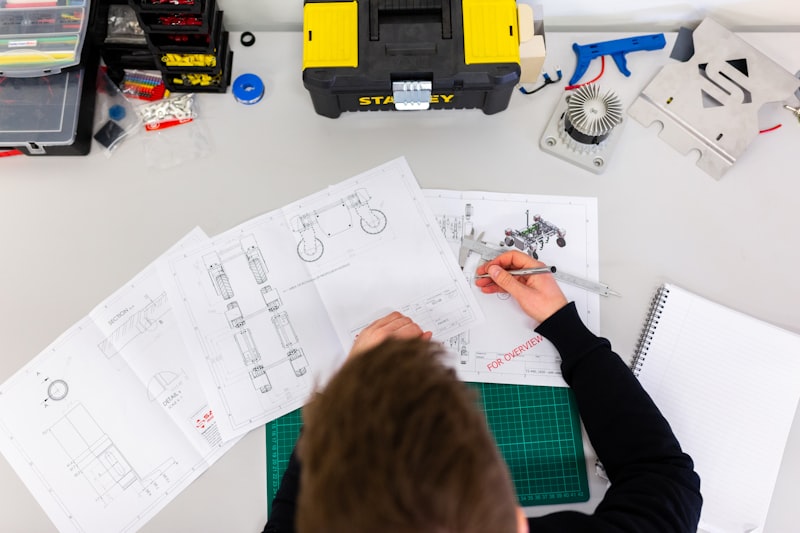
Selecting the right PLC (Programmable Logic Controller) control cabinet is one of the most critical decisions in any industrial automation project. The PLC serves as the brain of your automation system, and choosing the wrong one can lead to costly downtime, integration headaches, and scalability limitations. With over 25 years of experience in system integration, SENTRADO has helped hundreds of manufacturers navigate this decision. This guide distills our engineering expertise into a practical framework you can apply to your own projects.
1. Assessing Your I/O Requirements
The first step in PLC selection is a thorough I/O (Input/Output) inventory. Every sensor, actuator, valve, and motor in your system requires at least one I/O point, and you should always plan for 15-20% spare capacity for future expansion.
Digital I/O (Discrete Signals)
Digital I/O handles on/off signals — think limit switches, push buttons, indicator lights, and relay outputs. When counting digital I/O points:
- Inputs: Count all sensors (proximity, photoelectric, limit switches), push buttons, and selector switches
- Outputs: Count all indicator lights, solenoid valves, relay coils, and motor starters
- Consider voltage levels: 24VDC is most common, but some legacy equipment may use 120VAC or 230VAC
- Account for sinking vs. sourcing: This affects your module selection and wiring architecture
Analog I/O (Continuous Signals)
Analog I/O handles variable signals such as 4-20mA current loops, 0-10V voltage signals, and RTD/thermocouple temperature inputs. Common applications include:
- Pressure transmitters: 4-20mA output for process pressure monitoring
- Temperature sensors: PT100 RTDs or K-type thermocouples for ovens, reactors, and heat exchangers
- Flow meters: Analog output for water, gas, or chemical flow measurement
- Variable speed control: 0-10V analog reference for VFD speed adjustment
Special Modules
Beyond standard digital and analog I/O, many applications require specialized modules:
- High-speed counters: For encoder feedback, conveyor speed monitoring, and packaging applications
- Motion control modules: For servo-driven positioning, CNC integration, and robotic coordination
- PID control modules: For temperature, pressure, and flow control loops (though most modern PLCs have built-in PID)
- Communication modules: For fieldbus integration with Profibus, Modbus, or DeviceNet networks
2. Environmental Conditions & Enclosure Rating
The physical environment where your PLC cabinet will be installed directly impacts enclosure selection, cooling requirements, and component derating. Ignoring environmental factors is one of the most common mistakes we see in the field.
💡 SENTRADO Engineering Tip
Always conduct a site survey before specifying your control cabinet. Document ambient temperature, humidity, dust levels, vibration sources, and corrosive agents. This data directly determines your IP rating, cooling solution, and material selection.
IP Rating Selection
| Environment | Recommended IP | Typical Applications |
|---|---|---|
| Clean, air-conditioned control room | IP20 - IP30 | Server rooms, SCADA rooms, clean offices |
| Standard factory floor | IP40 - IP54 | Assembly lines, packaging, general manufacturing |
| Washdown / food processing | IP65 - IP66 | Food & beverage, pharmaceutical, cleanrooms |
| Outdoor / marine / heavy dust | IP66 - IP67 | Water treatment, mining, oil & gas, offshore |
Temperature & Cooling
Most PLC components are rated for 0°C to 60°C ambient. In hot environments, you must consider:
- Cabinet fans with filters: For environments up to 45°C ambient, proper ventilation is usually sufficient
- Air-to-air heat exchangers: For sealed cabinets in dusty environments up to 55°C
- Cabinet air conditioners: Required for ambient temperatures above 45°C in enclosed cabinets
- Component derating: Power supplies and VFDs lose capacity at higher temperatures — typically 3-5% per degree above 40°C
3. Communication Protocol Selection
Modern industrial facilities rely on robust communication networks to connect PLCs with HMIs, SCADA systems, MES platforms, and other controllers. Your protocol choice affects compatibility, speed, and future scalability.
| Protocol | Speed | Topology | Best For |
|---|---|---|---|
| PROFINET | 100 Mbps | Star / Line | Siemens ecosystem, process automation |
| EtherNet/IP | 100 Mbps | Star / DLR | Rockwell/AB ecosystem, North American plants |
| Modbus TCP | 100 Mbps | Star | Legacy integration, simple device communication |
| OPC UA | 1 Gbps | Client-Server | IT/OT convergence, Industry 4.0, MES integration |
Our recommendation: For new installations, we strongly recommend PROFINET or EtherNet/IP as the primary industrial protocol, with OPC UA enabled for IT/OT integration. This future-proofs your investment for Industry 4.0 initiatives such as predictive maintenance, digital twins, and cloud-based analytics.
4. PLC Brand Comparison: Siemens vs. Allen-Bradley
The two dominant PLC platforms in the global market are Siemens (SIMATIC S7 series) and Rockwell Automation (Allen-Bradley CompactLogix/ControlLogix). Here's how they compare for typical industrial applications:
| Feature | Siemens S7-1200 | Siemens S7-1500 | AB CompactLogix 5380 |
|---|---|---|---|
| Application Scale | Small to medium | Medium to large | Small to medium |
| Max I/O Points | ~1,000 | ~100,000+ | ~30,000 |
| Native Protocol | PROFINET | PROFINET | EtherNet/IP |
| Programming Software | TIA Portal | TIA Portal | Studio 5000 |
| Motion Control | Basic (Technology I/O) | Advanced (TO + ETK) | Advanced (CIP Motion) |
| Safety Integrated | Optional (F-CPU) | Integrated (F-CPU) | Optional (GuardLogix) |
| Approx. CPU Price (USD) | $800 - $2,500 | $3,000 - $15,000 | $2,000 - $8,000 |
| Best Suited For | OEM machines, small lines | Large plants, process industry | North American plants, mixed I/O |
5. Programming Environment: TIA Portal vs. Studio 5000
The programming environment is just as important as the hardware itself. Your engineering team's familiarity with the platform will significantly impact development time, debugging efficiency, and long-term maintenance costs.
Siemens TIA Portal
- All-in-one platform: Integrates PLC, HMI, drive configuration, and safety in a single environment
- Hardware configuration: Visual drag-and-drop hardware setup with automatic address assignment
- Simulation: PLCSIM Advanced for offline testing without hardware
- Version control: Built-in project versioning and library management
- Trace & debug: Powerful online debugging with real-time variable monitoring
Rockwell Studio 5000
- Tag-based programming: Eliminates manual address management, improving readability
- Add-On Instructions: Create reusable code blocks that can be shared across projects
- Emulate 5000: Software simulation for offline development and testing
- Connected Components Work: Lightweight programming for smaller SLC/MicroLogix replacements
- Network integration: Seamless CIP networking with FactoryTalk View and Vision
6. Budget & Scalability Considerations
While it's tempting to choose the lowest-cost option, PLC selection should account for total cost of ownership (TCO), not just initial hardware cost. Consider these factors:
- Spare parts availability: Siemens and Allen-Bradley have the best global support networks. Niche brands may offer cheaper hardware but face longer lead times for replacements.
- Engineering training costs: Your team likely already knows one platform. Switching platforms requires 2-6 weeks of training per engineer.
- Expansion module costs: Some platforms have expensive proprietary modules; others support third-party I/O via standard protocols.
- Software licensing: TIA Portal and Studio 5000 both require paid licenses. Factor in upgrade costs for new versions.
- Lifecycle considerations: Plan for a 15-20 year lifecycle. Ensure the platform has a clear roadmap and won't be discontinued during your equipment's service life.
⚠️ Common Mistake
Choosing a PLC based solely on hardware price often leads to 30-50% higher total costs due to expensive expansion modules, limited availability of spare parts, and the need to train engineers on an unfamiliar platform. Always calculate TCO over a 10-year horizon.
7. SENTRADO's PLC Control Cabinet Integration Services
As a Siemens Authorized Distributor and ABB Certified System Integrator, SENTRADO provides end-to-end PLC control cabinet solutions — from initial specification to commissioning and after-sales support. Here's what we deliver:
- Custom cabinet design: Tailored to your I/O count, environmental requirements, and available floor space
- Complete assembly & wiring: All panels are fully assembled, wired, and tested at our 5,000m² facility before shipment
- Programming & commissioning: Our 30+ engineer team handles PLC programming, HMI development, and on-site commissioning
- UL/CE certification: All cabinets meet international safety standards with full documentation packages
- OEM manufacturing: We serve as a production partner for OEM machine builders worldwide
- Remote monitoring: Optional IoT integration with predictive maintenance capabilities via our cloud platform
Need Help Selecting Your PLC Control Cabinet?
Our engineering team can assess your application requirements and recommend the optimal PLC platform, I/O configuration, and enclosure design. Contact us for a free consultation.